


No products in the cart.


Object of the Month – December 2025
Heroic Act on the Dike
First Lieutenant Ian Jacob Havelaar of the reconnaissance unit of the Princess Irene Brigade was deployed in November 1944 on the dike near Colijnsplaat. The neighbouring island of Schouwen-Duiveland was still under German control, and from there the Germans planned to blow up the sluice at Colijnsplaat to flood the surrounding area and the village itself. Thanks to Havelaar and his men, that plan was foiled. While observing enemy movements, Havelaar raised his head above the dike and was fatally struck by a bullet — a chance hit, not an execution. The German commander was also killed in the firefight, after which most of the German soldiers surrendered.
From Grave Marker to Museum Piece
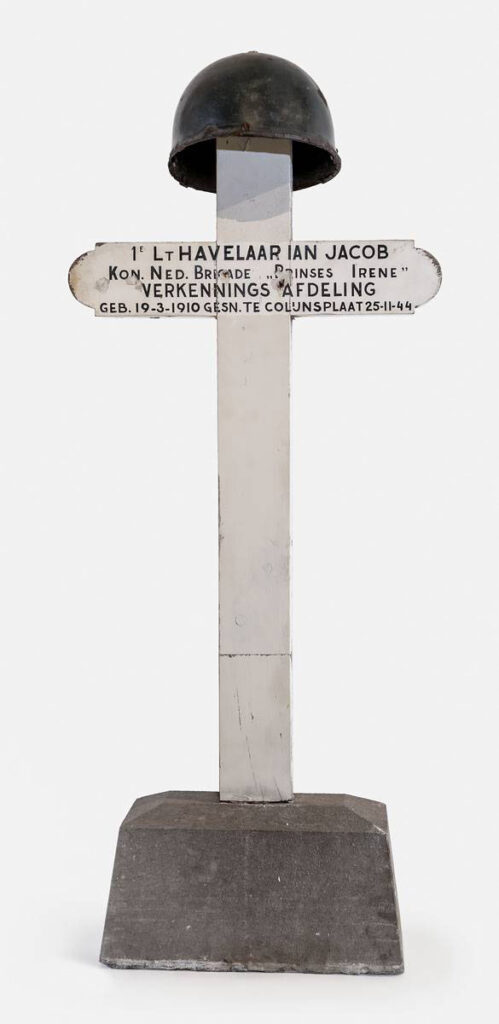
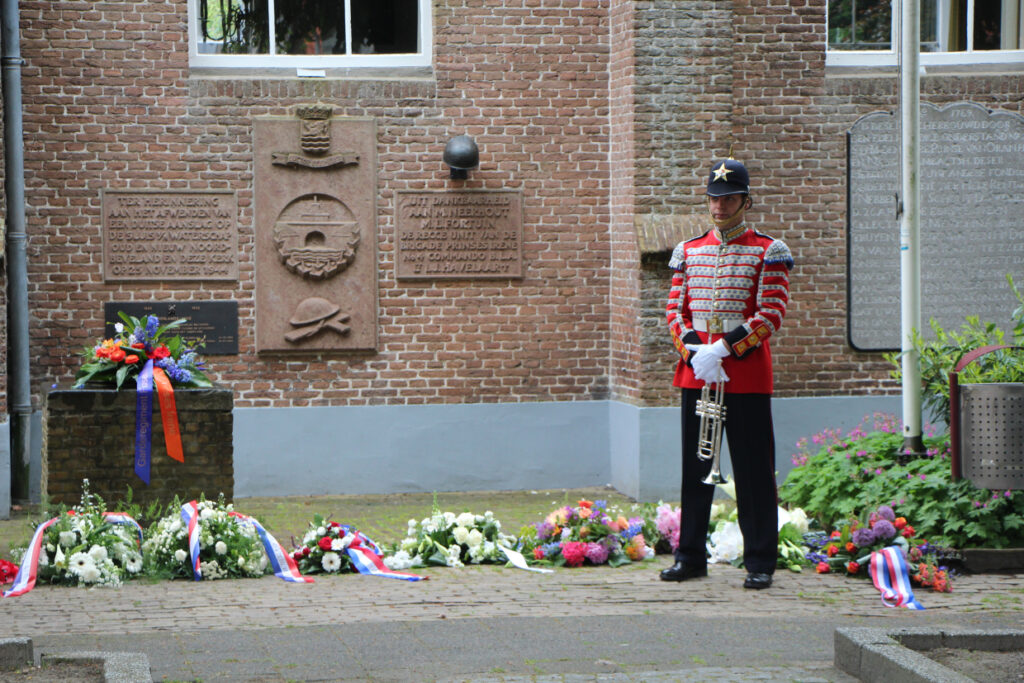
Havelaar was buried the next day in Colijnsplaat, and on 5 August 1945 reinterred in his family grave in Hillegersberg (vault no. 12). A simple wooden grave marker stood on his grave — that very same wooden cross is now part of the museum’s collection. The family has since relinquished the burial rights; in consultation with relatives, the Netherlands War Graves Foundation and other parties, it was decided to transfer Havelaar’s remains back to Colijnsplaat — the place where he fell and where his memory continues to be actively preserved. In the centre of Colijnsplaat, Havelaar Street was named in his honour, and near the church stands a monument featuring a bronze replica of his helmet.
Symbolism and Meaning
The wooden grave marker carries the silence of a wartime story and commemorates a young officer who gave his life for freedom and the protection of his community. It is not a grand or spectacular object, but its modest form is precisely what makes it powerful — tangible, minimalist, human. In a time of violence and destruction, Havelaar made a difference. Today, the cross serves as a bridge between past and present — between an individual life and the broader story of war and liberation.