No products in the cart.

Object of the Month – October 2025
A bullet, a map, and a bag with a story
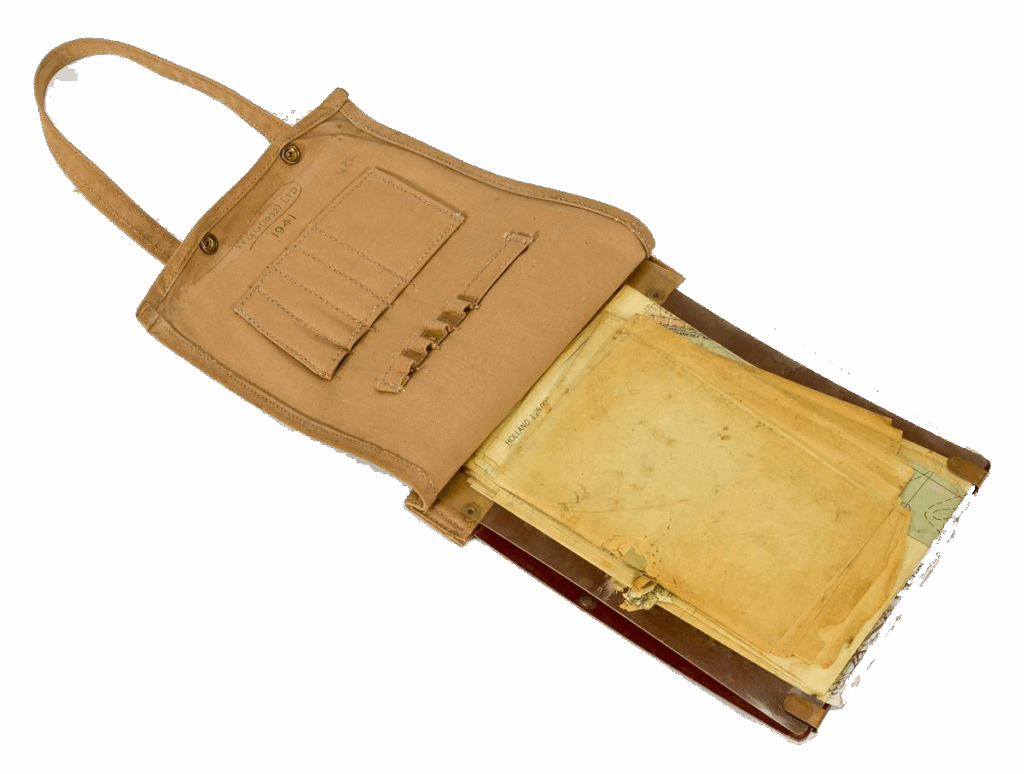
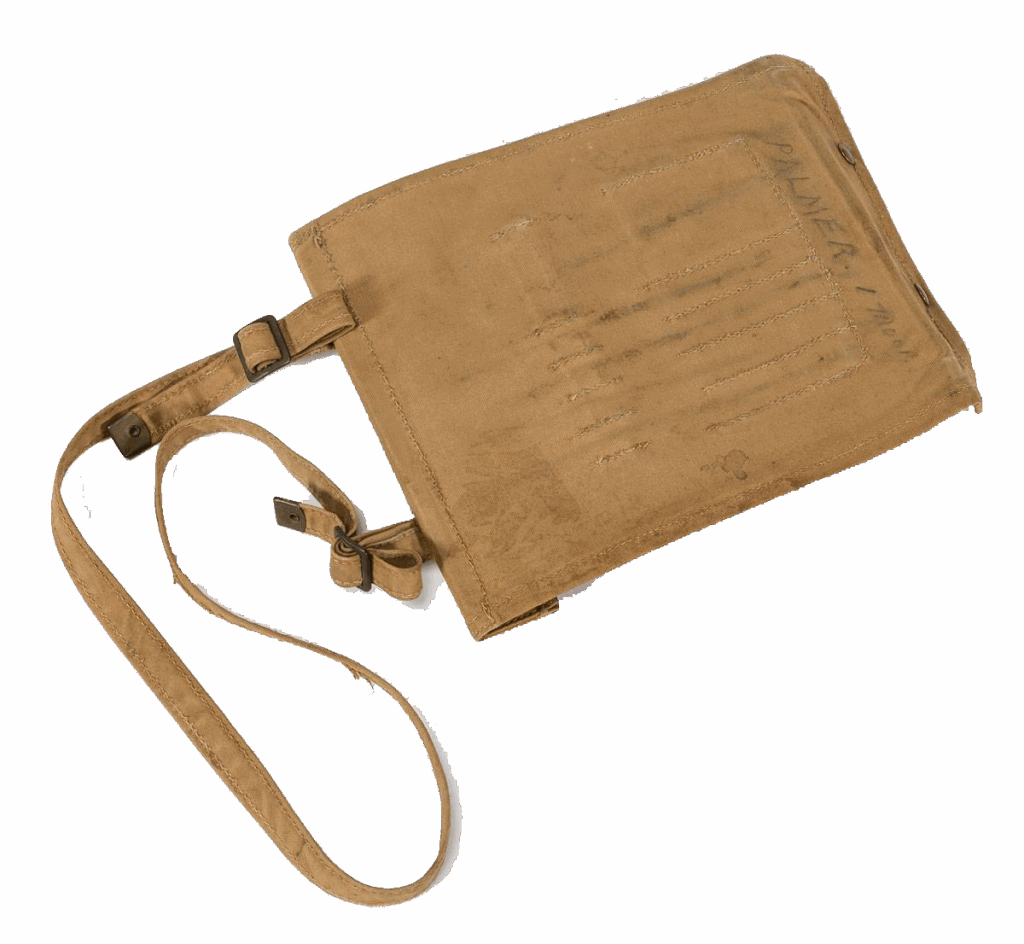
Sometimes a single object tells a story larger than itself. This map case, still largely intact but bearing the visible mark of a bullet impact, belonged to British soldier Reginald Palmer. On November 1, 1944, he landed with No. 4 Commando on Uncle Beach in Vlissingen, under fire from German forces.
During the assault, bullets literally whistled past Palmer’s head. One of them struck his bag; another pierced straight through the map of Vlissingen he kept inside. Palmer barely survived. Later that day, he lost the bag. He continued his advance through Zeeland with his unit, unaware that the object which may have saved his life would remain behind in Vlissingen.
A long way back to the story
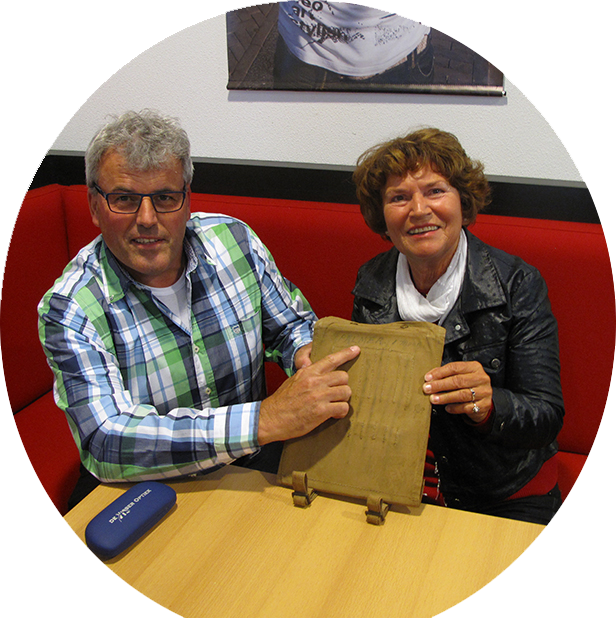
After the war, the map case was picked up by a resident of Vlissingen and eventually became part of the collection of collector Kees Roelse. After his passing on April 2, 2010, his widow, Addie Roelse, rediscovered the bag. She decided there was no better place for this remarkable object than the Bevrijdingsmuseum Zeeland.
Several years earlier, Alan Palmer, Reginald’s son, had visited the museum. He was searching for his father’s story and donated several personal items, including photographs and documents. During that visit, he also spoke about the map case his father had lost in Vlissingen. When the bag later found its way to the museum, we were able to show it to him after all. The name PALMER was still visible on the flap, and the original map of Vlissingen — still marked by the bullet holes — was still inside.
About Reginald Palmer
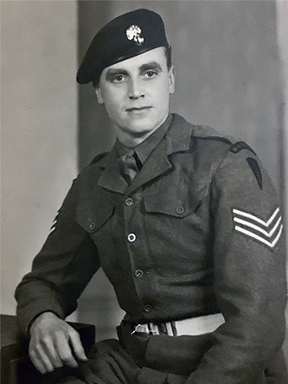
Reginald Palmer was born in January 1918 in Rushden, Northamptonshire, UK. After finishing school, he worked in the shoe trade but joined the Territorial Army as a volunteer. In 1941, he enlisted with No. 4 Commando, an elite unit within the British Army. He trained in Scotland near Fort William and took part in operations in Dieppe, Normandy, and finally on Walcheren.
After the war, Palmer worked for the Control Commission for Germany, which was involved in the reconstruction of the country. Later, he returned to England. He passed away in 1991.
A tangible memory of Vlissingen
Reginald Palmer’s map case is now a remarkable part of our permanent exhibition on the Battle of the Scheldt. Together with the objects donated by his son, the bag tells a personal, poignant, and rare story of courage, coincidence, and remembrance.
What was once left behind on the beach of Vlissingen returned decades later to our collection — as a silent witness to an almost fatal day and to the enduring connection between people, places, and history.